Bhramari Breath (Bee Breath): How Humming Calms Your Nervous System—Without Overthinking It

Bhramari Breath: More Than Just “Bee Breath”
Bhramari Pranayama—often called bee breath—is one of those yoga practices that sounds simple on the surface: inhale, then exhale with a hum.
But if you’ve ever tried it and thought, “I don’t really feel anything,” you’re not alone.
What makes Bhramari powerful isn’t just the breath—it’s the sound, the vibration, and how your body organizes itself to create that sound.
And when you understand that, the practice becomes much more accessible—and much more effective.
The Story Behind Bee Breath (and Why It Matters)
Bhramari comes from the Sanskrit word bhramara, meaning bee. In yogic mythology, Bhramari is a goddess who defeats a demon that couldn’t be killed by anything with two or four legs—so she summons swarms of bees (they have 6 legs).
It’s a great story. But more importantly, it gives you a useful image:
This practice isn’t delicate or precious. It’s primal, powerful, and a little messy.
That’s a helpful reframe, especially if you’ve been approaching breathwork as something you have to get perfect.

Why Humming Works (It’s Not Just Relaxation)
Humming does something that quiet breathing often doesn’t:
👉 It gives your nervous system something to feel
👉 It gives your mind something to focus on
👉 It creates vibration through the body and skull
From a physiological standpoint, humming:
Encourages longer, slower exhales
Stimulates the parasympathetic nervous system (rest-and-digest)
Improves vagal tone
Helps regulate breath rhythm
Can reduce symptoms of stress, anxiety, and overwhelm
But here’s the key insight:
If your body is tense, your hum will tell you.
A tight jaw, tense face or lips, or a constricted throat will show up immediately in the quality of the sound.
T
hat makes Bhramari not just a calming tool—but a feedback tool.
Why This Practice Feels Awkward (At First)
Let’s address the obvious:
Humming out loud can feel… uncomfortable.
Many people hesitate because:
They’re worried about how they sound
It feels childlike or unfamiliar
It requires using the voice in a vulnerable way
This is actually part of the practice.
There’s a subtle layer of non-judgment here—not just toward your breath, but toward your voice and expression.
And once you move past that initial resistance, something shifts.
How to Practice Bhramari (Without Overcomplicating It)
There are traditional forms—and then there’s what actually works in real life.
Step 1: Start with a cleansing breath
Take a slow inhale through your nose.
Let your exhale be a letting go. An open mouth sigh is great.
Step 2: Add the hum
As you exhale, create a steady mmmmmmmmm sound.
Think low and smooth, not high and strained
Let the sound be comfortable, not performative
Start quietly and let the sound build naturally
Lower pitches tend to feel more grounding and calming.
Step 3: Keep it sustainable
Stop before you add tension to the body.
This is where people often go wrong.
If the breath becomes stressful, it stops being calming.

Optional: Add hand positions, the mudra (or don’t)
A traditional mudra (Shanmukhi mudra) involves gently closing off the senses by placing fingers over the ears, eyes, and framing the mouth.
But it’s optional. It can help you turn inwards and focus. You might also feel the vibrations in the head more clearly.
But it is just as valid to:
Place one hand on your chest and one on your forehead (compare chest vibrations to those in the skull)
Or simply rest your hands in your lap or over your belly.
Choose what helps you tune in best.
A More Realistic Way to Think About It
This doesn’t have to be a formal pranayama or breathing exercise.
You can:
Hum while driving
Hum while walking
Hum while doing dishes
Hum along with music
It doesn’t have to be “pranayama” to be effective.
In fact, for people with anxiety, less structure is often better.
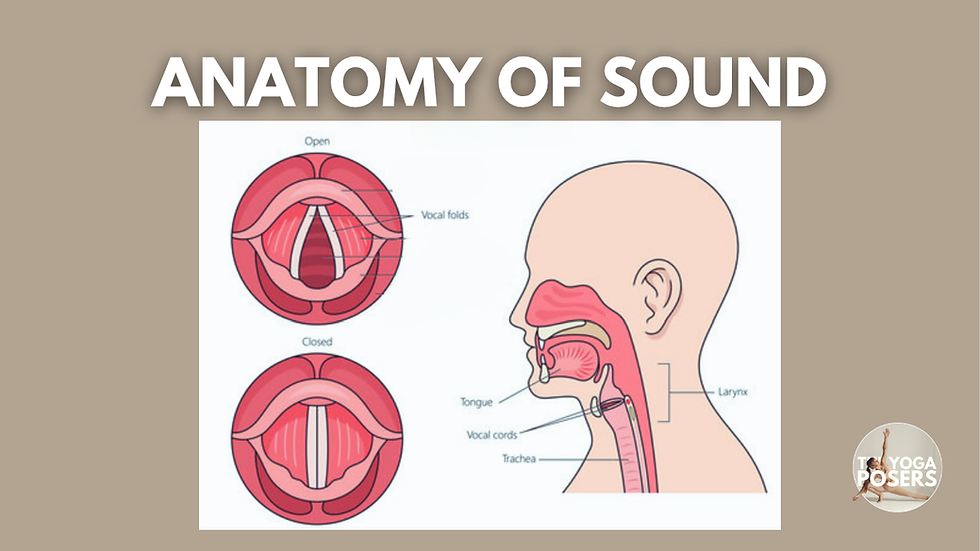
The Anatomy Behind the Calm
When you hum well:
The vocal folds vibrate without tension
The throat feels wide open rather than tightening
The jaw and face go slack
The tongue moves to its optimal position: covering the roof of the mouth
There’s also a fascinating connection between:
Jaw tension
Tongue position
Breathing patterns
Even pelvic floor tension
This is why practices like:
Relaxing the jaw
Letting the tongue rest on the roof of the mouth
Softening the face
…can dramatically change how you feel. You are training relaxation.
Humming as an Anchor for Anxiety
One of the most practical takeaways:
Humming gives your mind something to “hold onto.”
If focusing on your breath makes you more anxious (which is common), the sound becomes an anchor instead.
Instead of:“I need to calm down”
You shift to:“I’m listening to this sound”
It’s subtle—but powerful.

What to Look For: Signs It’s Working
You don’t need a dramatic shift to know it’s helping.
Look for small changes:
Shoulders dropping
Breath becoming smoother
A more even tone in your hum
Warmth in the body
Digestive sounds (yes—really)
A spontaneous sigh
Or simply:
Feeling a little more “comfortable” in your body
A Note on Anxiety + Breathwork
This matters.
For some people, breathwork can increase anxiety—especially if:
The exhale is too long
The breath feels controlled or restricted
There’s pressure to “do it right”
If that’s you:
Keep the breath natural
Shorten the exhale
Focus more on the sound than the structure
The most useful tool is the one you’ll actually use.
Playfulness Matters More Than Precision
One of the best parts of this practice?
It can be playful.
You can experiment with:
Different pitches
Different resonances (chest vs. skull)
Repeating rhythmic sounds like “mum mum mum”
Trilling the tongue or blowing horse lips to help relax your sound making apparatus.
If it makes you laugh, you’re doing it right.

The Real Takeaway
Bhramari isn’t about perfect breathing.
It’s about:
Reducing unnecessary tension
Creating vibration and awareness
Giving your nervous system a different input
Practicing something simple enough to actually repeat
And most importantly:
You don’t need to do it perfectly for it to work.
Try This Today
Instead of feeling pressured to set aside time for a full practice, try this:
Hum in the car
Hum while making tea
Hum while walking
No structure. No pressure.
Just sound.
Final Thought
Your breath is always with you—but so is your voice.
And sometimes, the simplest way to shift your state…is to make a little noise.


Comments